
Ayaan Jindal
May 26, 2026 · 4 min read
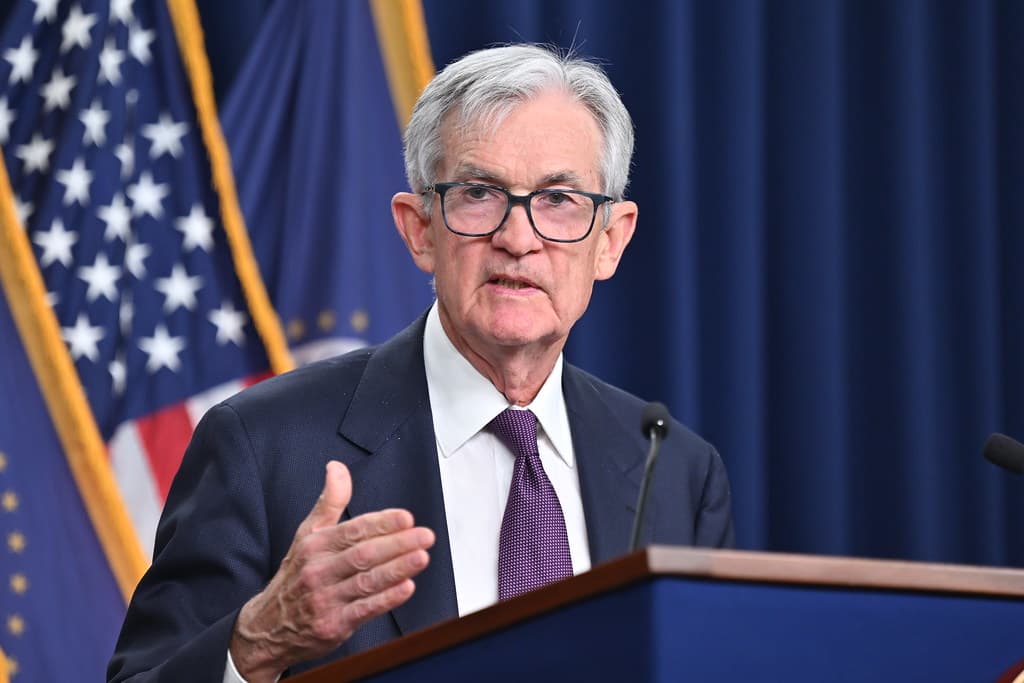
Kevin Warsh took the oath of office as the new Federal Reserve Chairman on May 22nd. He has vowed to lead a "reform-oriented" Fed. The bond market, though, delivered a rather less-desirable first salvo to the new chief.
What Happened in the Bond Market
Three days before the oath of office was administered to new Federal Reserve Chairman Kevin Warsh, on May 19th, the 30-year Treasury bond yielded 5.197%, the highest level since July 2007. The 10-year Treasury bond, meanwhile, was yielding 4.687%, the highest level since early 2025. We point out that the yields on the government's debt are important, because they have a direct impact on a variety of interest rates. For instance, the yield on the 30-year Treasury bond is key in determining the interest rate on 30-year mortgages. Similarly, the yield on the 10-year Treasury note is used as a benchmark in determining rates on a host of other consumer and business loans, which carry a fixed interest rate and mature in a specific time period. Thus, the jump in yields on the government's debt in recent days is not merely a number that gets the attention of bond traders, it is also a number that affects the cost of borrowing in a variety of ways.
What a Bond Yield Actually Is
When the government issues a bond to borrow money, it pays interest on that bond to the investor. The interest rate on that bond is known as the yield. If investors are fearful of lending to the US, they demand a higher interest rate, which causes the price of existing bonds to decline and their corresponding yield to increase.
Investors are demanding high yields and thus the prices of bonds are falling. This has caused the 30-year mortgage rate to spike to a 9-month high of 6.6% as mortgage rates are highly correlated with the yields on long-term Treasury bonds. For example, a $400,000 loan at a 6% interest rate would cost $2,166 per month. A loan at a 7% interest rate would cost $2,435 per month, an increase of $270 per month for the same amount of principal.
Why the Bond Market Is Nervous
One, oil prices have risen about 60% since the start of the US-Iran war, pushing up the price of gasoline at the pump and keeping inflation at or above elevated levels. Inflation has been rising at an annual rate of 3.8% over the last year, the highest in the last three years, and well above the Fed's 2% inflation target.
But there is more going on here than high inflation. There is the problem of US debt, currently sitting at a staggering $39 trillion and rising by some $5 billion every 24 hours. Interest on that debt is currently consuming an unsustainable 19% of all federal revenue. And to add to the pile, the "One Big Beautiful Bill" passed by the House of Representatives this month, which extends Trump's 2017 tax cuts and increases spending on defense and border security, is expected to add some $4 trillion to the debt over the next decade. All this is grist to the mill of the bond market, and its current view is that Washington should be paying a premium for the privilege of being able to keep borrowing.
What This Means for Warsh
His first FOMC meeting as chairman will be June 16-17 and he will no doubt come under pressure to deliver rate cuts as promised by President Trump. But with inflation already running at 3.8% and having reaccelerated of late, to cut interest rates would merely risk adding to that problem and leading to higher bond selling, and in turn higher bond yields. In fact, the relationship between lower interest rates and higher inflation is well documented, and only when the subsequent higher inflation is bringing down the real value of the outstanding debt, would such a course of action potentially start to bring down the interest burden on the debt. Until then, cutting interest rates is likely to have the opposite of the intended effect.
That Chairman Warsh said at his swearing-in that he would never "predetermine" rates at President Trump's request is a far cry from actually not doing it.
The Bottom Line
New Fed Chairman Kevin Warsh became the head of the Federal Reserve on May 22nd. Three days before, the bond market gave him a very unpleasant welcome gift: three-year-high inflation, and the worst Treasury yields since 2007. As a result of this environment, the 30-year mortgage rate hit a nine-month high of 6.6%. Now it is up to Chairman Warsh to manage the upcoming FOMC meeting on June 16-17. His decisions will have an impact on anyone holding a mortgage, a savings account, or even their job.
Discussion
Comments
Loading…
Leave a comment
Be the first to share your thoughts.