Ayaan Jindal
May 4, 2026 · 5 min read
On April 29th, the Federal Reserve took no action at its latest meeting, keeping rates on hold at 3.50% to 3.75% for the third straight meeting at a time when the economy is slowing. But this was not just another boring meeting from the central bank. The Fed is more divided than it has been in decades, and at the meeting's press conference Jerome Powell spoke to the media for the last time as Federal Reserve chair.
What the Fed Actually Does
The Federal Reserve controls interest rates for the United States. When interest rates are high, borrowing money is expensive. So, high interest rates make expensive mortgages, expensive car loans, and expensive money to build a business with. In turn, high interest rates slow down an economy and curb inflation. Low interest rates have the opposite effect: they make money flow more freely, which can lead to a faster growing economy and higher inflation. For the last three months, the Federal Reserve has maintained a range of interest rates of 3.50% to 3.75%. This is because the Fed is caught in the middle of two opposing problems: high inflation and a slowing down economy. Inflation is currently above the 2 percent target, meaning the Fed should maintain a higher interest rate to try to reduce inflation. At 3 percent, that means everyday costs like groceries, rent, and gas are still rising faster than the Fed wants. But the economy is slowing significantly, and the Fed might typically reduce interest rates to try to prevent even further economic decline. The Fed cannot solve for both of these problems simultaneously at the current moment, and has thus done nothing for three consecutive Fed meetings.
A Fed Divided
What made April 29th unusual was not the decision itself. It was how close the vote was. The final count was 8 to 4, with four members dissenting. That is the most dissenting votes at a Fed meeting since 1992. For an institution that almost always moves by consensus, that is a significant crack.
Some members dissented with respect to cutting rates today but opposed incorporating language into the statement that would signal to the public that rate cuts are anticipated in the future. Such is the case of Stephen Miran who wished to have lowered the fed funds rate by a quarter percentage point. Others, Hammack, Kashkari and Logan would have held rates at current levels but would not have included language in the statement regarding the potential for rate cuts in the future. Thus, while four members dissented from the majority of lowering rates today, they were not united in their dissent as Miran was alone in wanting to lower rates today. Hammack, Kashkari and Logan simply wished to have kept rates on hold without any hint of rate cuts in the future.
The Fed is simply uncertain, and the markets know it.
Powell's Last Press Conference
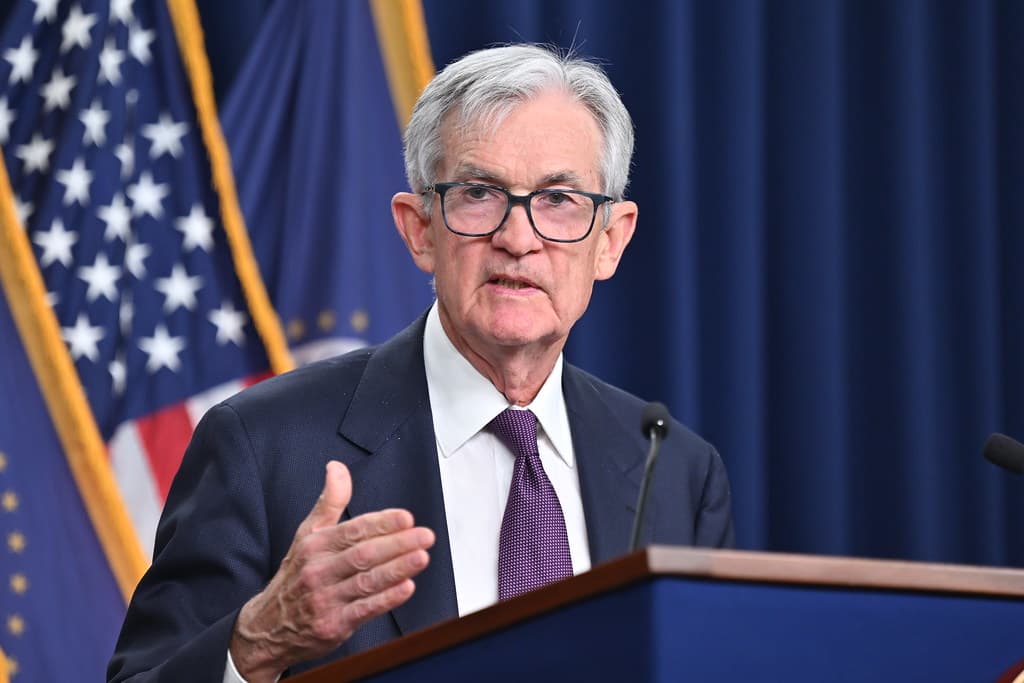
Powell said at the Fed meeting's press conference that this was his last as Fed Chairman. He is now finished with his term as Chairman and will remain on at the Federal Reserve as a member of the Board of Governors. Kevin Warsh, a former Fed governor and close ally of President Trump, is widely expected to be named as his replacement.
For many reasons, including the current state of inflation and upcoming tariffs on Chinese imports, Powell will be leaving as Chair of the Federal Reserve. Powell had led the Fed since 2018 when he was named as the Federal Reserve Chairman by then President Donald Trump. During his tenure as Chairman Powell had led the Federal Reserve through the massive global and US spread caused by the worldwide pandemic in 2020 and through a very rapid raise of interest rates to the highest level in forty years in order to bring down an inflation rate of 9 percent in 2022. He had then lowered rates in late 2024 amid fears of a slowing economy that he felt would require lower interest rates and increased money to spur economic growth. However, in the past three Federal Reserve meetings, Powell and the Fed have decided to keep interest rates the same, at 3.50 to 3.75 percent, with inflation still above target at 3 percent as of its most recent reading.
"This is my last press conference as chair," Powell said, "and I will close with a few thoughts. This is an institution that has served the American public well and I'm confident it will continue to do so."
Why It Matters Who Runs the Fed
The Federal Reserve chair is one of the most powerful economic positions in the world. The chair determines how the institution communicates with the public, how it handles crises, and how independent it stays from political influence. With a new chair coming in soon, the big question is whether the Fed will continue to be an independent inflation fighter or begin cutting rates for political reasons to give the White House an economic boost. An institution dedicated to fighting high inflation even when it is unpopular is a very different thing from one that lowers rates on demand. That difference matters to everyone.
The Bottom Line
The Federal Reserve maintained the fed funds rate at 3.50% to 3.75% for the third consecutive meeting and the lack of action was widely reported as "ho-hum." However, there is much more going on at the Fed than meets the eye. The Fed is more divided than it has been in decades, and last week marked the last press conference of Federal Reserve Chairman Jerome Powell as Chair. He will remain on the Board of Governors. The rate decision and the end of an era at the Fed matters mightily to those with a mortgage, car loan, savings, and a job.

Discussion
Comments
Loading…
Leave a comment
Be the first to share your thoughts.